Honouring his parents’ trust and a school’s impact, one alumnus, who wishes to remain anonymous, ensures the legacy of Scarisbrick Hall School will endure.
“What a building.”
The thought came unexpectedly.
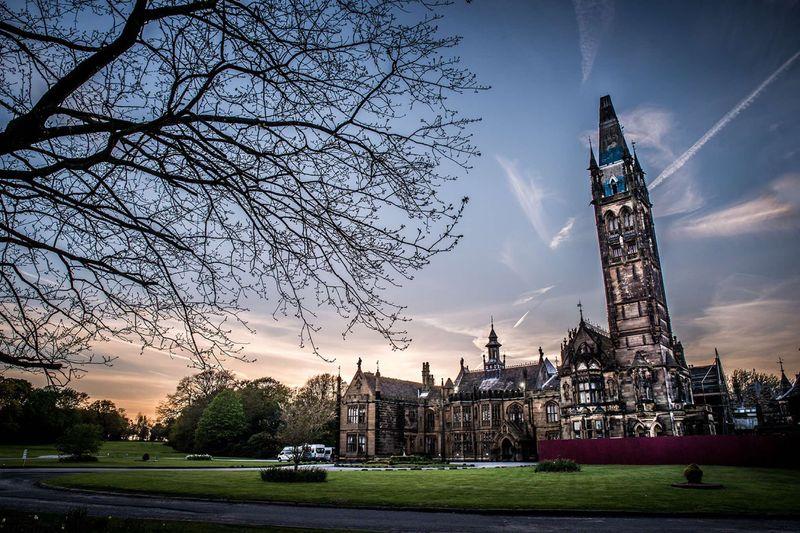
In the summer of 1964, a nine-year-old boy stood in the courtyard of Scarisbrick Hall School and lifted his eyes to the neo-Gothic tower rising above him. Ornate, commanding, almost ecclesiastical in its confidence, it seemed less a school than a citadel of purpose. In that moment there was awe, but also something quieter: a sense that he had arrived somewhere of consequence.
For his parents, the Hall represented more than architecture. It was a sense of hope. Dissatisfied with his earlier schooling, his father had described it, without ceremony, as a complete waste of money. So, they chose instead to entrust their son to a newly founded and as yet unproven institution. It was an act of faith, not only in a school, but in the enduring value of sound education. That decision would echo across the decades.
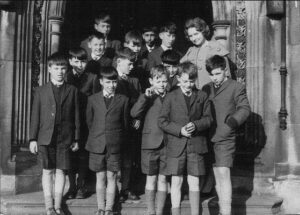
His first day, Tuesday, 15th September 1964, remains distinct in his memory. The Pugin Room – he discovered its name in later years – high under the eaves. A desk beside Peter Rivers, son of the vicar of St John’s, Burscough, and soon a friend. Around seventy-five boys in total, the air charged with the expectancy of beginnings.
The formal opening assembly in the chapel set the tone. Families and well-wishers filled the space. Professor F. F. Bruce offered a Prayer of Dedication, words so integral to the school’s founding spirit that they were later framed and hung upon the chapel wall. Even now, preserved in what is known as the Blue Drawing Room, that prayer endures – a quiet testament to first principles.
Boarding life soon assumed its rhythm. Miss Dorothy Cowen, the first matron – orderly, attentive, unfailingly kind – would usually gather younger boys before breakfast for Bible study. Scripture Union notes in hand, he attended faithfully. It was here, and in the steady pattern of assemblies and fellowship, that his Christian faith took root. Not a blaze of revelation, but gradually and sincerely. A conviction formed over time, and one that has remained.
Discipline in those early years was firm yet rarely harsh. A glance or raised eyebrow often sufficed. Within that framework, individuality flourished. There were sportsmen of note, thoughtful scholars, and those inclined toward letters who produced the poetry magazine Pressure Point. It was a community small enough for character to be visible, and large enough for ambition to take hold.
Above all, he remembers the teachers.
Tudor Morris, his English teacher, was a figure of lasting influence. Demanding yet generous of spirit, he encouraged poetry, composition, and even the writing and performance of original Sherlock Holmes adaptations. For a naturally reserved boy, such encouragement was transformative.
The influence endured. In later years, he himself would teach English for nearly four decades, directing plays and musicals, endeavouring to awaken in his pupils the confidence once awakened in him.
The intellectual life of the Hall was lively. Peter Kimber, Senior Tutor, founded The Choregoi, a literary society fashioned after the Greek ideal of learned fellowship. As a Fellow and Secretary, he helped organise lectures, among them Professor Alan Millard’s thoughtful critique of the then-fashionable Chariots of the Gods. David Raynor mounted ambitious dramatic productions, including The Insect Play, with a cast of sixty. The conversion of the old boathouse – Tudor Morris’s suggestion – into a makeshift theatre spoke of initiative, co-operation and resourcefulness.
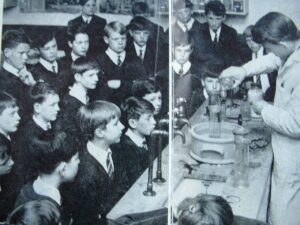
Science, too, had its moments of quiet drama. Ian Wride prepared the boys for a solar eclipse, distributing smoked glass for safe observation. The chosen charity, War on Want, cultivated a sense of responsibility beyond the school gates. And there were wonderful maths teachers like Anthea Wray and Betty Thomas, and Susan Ledson, the attractive Biology teacher, who organised the Riding Club.
The boarding community itself was notably cosmopolitan. Boys arrived from Hong Kong, Norway, Turkey, Cyprus, and from families stationed across Africa and Japan. In sharing dormitories and daily life, horizons widened naturally. Tolerance was not taught as theory; it was practised.
There were, too, the rhythms of weekends. Saturdays brought freedom, with long walks of exploration through Scarisbrick Park, tree-climbing, and the hopeful flight of balsa-wood aeroplanes. Autumn meant gathering apples in the orchard, with old varieties like Laxton Superb and Worcester Pearmain stored for winter fare.
Music threaded through school life: piano lessons and duets with Miss Katherine Kempster, harpsichord under Mr Rogers’ encouragement.
The building itself invited wonder. Corridors echoed with tales of Lady Anne’s ghost. A ten-year-old venturing to the lavatory at night often sought moral support for the journey. Beneath the Hall, narrow tunnels (likely for ventilation) offered irresistible temptation to the adventurous. Minor disputes were occasionally resolved in supervised boxing or wrestling bouts, refereed with due seriousness by Ian Wride.
In his final term, he and several sixth-form companions summoned the courage to request permission from the Headmaster, Charles Oxley, to ascend the tower. Mr Oxley agreed. A typed note secured the keys; another absolved the school of responsibility – an arrangement characteristic of its time. The view across the surrounding landscape was ample reward.
Academically, this young boy prospered. From reluctant reader he became an avid one; steady progress culminated in the award of a shield for O Level success, followed by A levels and subsequently university. His education – the security his parents had promised, whatever the circumstances – had provided firm ground in which he might grow.
In retirement, reflection brought him full circle.
He has since donated several hundred books to the school library in memory of his parents. Yet he felt compelled to do more. While drafting his will, he recalled their original act of trust in a fledgling school and in their son. In gratitude, he has included Scarisbrick Hall School within his will, specifying a bequest for student bursaries.
He describes it simply: planting trees in the full knowledge I shall never sit under their shade.
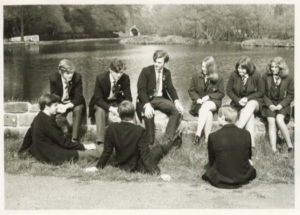
A photograph from the summer of 1973 shows a group of young men in the UVlth, together with other fellow students. They are poised on the threshold of departure, their futures unwritten, their paths diverging.
His bequest is not an ending but a beginning: a tribute to parents who believed, to teachers who inspired, and to a school whose tower once caught the eye of a nine-year-old boy and stirred in him a sense of destiny.
And somewhere, even now, another child stands in that courtyard, looks up, and feels the same stirring.
For those who feel a similar connection to Scarisbrick Hall School, and who wish to ensure that future generations may share in the same opportunity, we warmly welcome conversations about leaving a legacy gift to the School. Such acts of generosity quietly shape the future, allowing the story to continue for those yet to arrive. Contact us at Alumni@scarisbrickhallschool.co.uk
 Join us Saturday 10th October – Booking is essential due to demand